Every number in the app starts as something physical. Here is the path from your body to the app, in three steps.
What happens
Your heart beats, blood moves through your wrist, your skin warms and cools, you move and you rest. It happens all day and all night, with or without an audience.
What it leaves
None of it is invisible. Each pulse briefly changes the volume of blood under your skin. Blood carrying more oxygen reflects light differently. Each heartbeat sends a faint electrical signal all the way to your fingertips.
What we read
Small LEDs and light sensors follow the blood volume changes. Electrodes pick up the electrical signal when you touch them. The band records; the app turns the recording into trends you can read.
Your baseline first, then your trend.
Your own baseline, learned over the first days
Followed month after month
You see where it is heading
Each heartbeat pushes a small wave of blood through your wrist. Under the skin, the volume of blood rises and falls with every beat, and the way it rises and falls changes with what your body is doing.
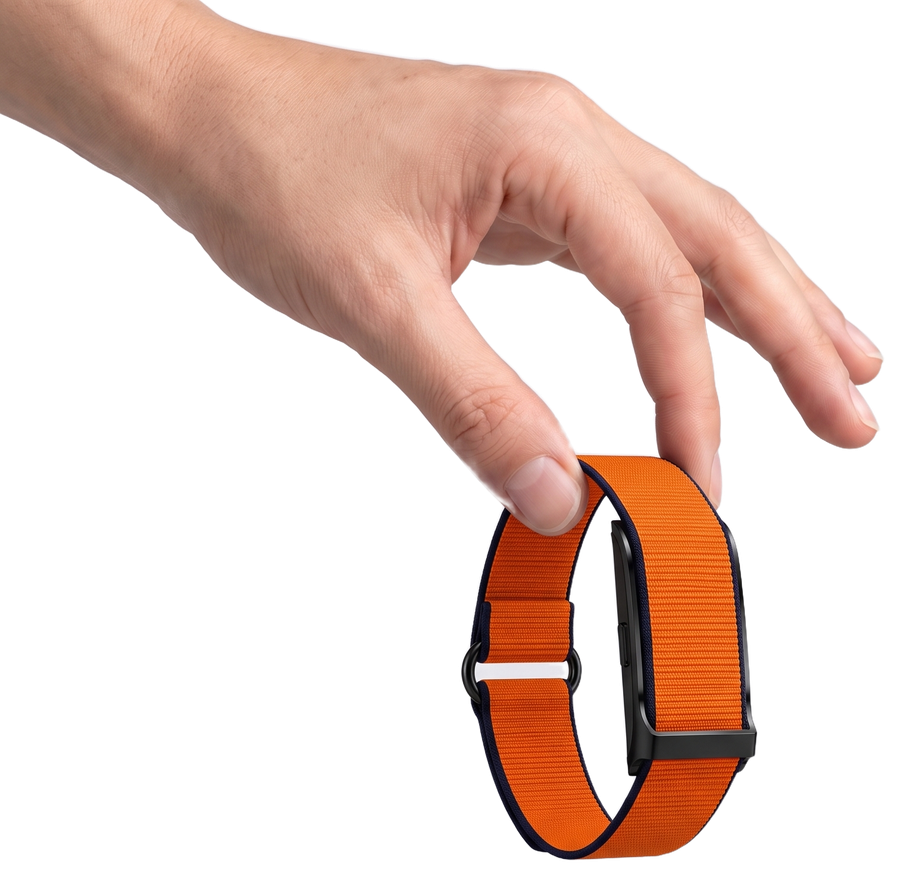
LEDs on the underside of the band shine light into the skin, and light sensors measure how much comes back. That is the raw signal. The band stores it; your phone does the math. Nothing needs to be shown on your wrist, which is also why the battery lasts days instead of hours.
Three kinds of sensors, each reading a different thing:
Optical (PPG). LEDs shine into the skin and the reflected light follows blood flow: the profile of each pulse, heart rate, HRV and blood oxygen
Electrical (ECG). Electrodes pick up the heart's electrical signal when you touch them. On ThumpFit 2.0
Bio-impedance (BIA). A current you cannot feel passes through tissue and reads body composition. On ThumpFit 2.0 and ThumpTrack
Add a motion sensor for activity and a thermometer for skin temperature. None of this is new; what we changed is that it stays on your wrist all day.
ThumpFit 2.0, the sport band: ECG, heart rate, heart rate variability, sleep stages, recovery and stress, blood oxygen, skin temperature, body composition, blood pressure trend estimates, daily activity and a silent alarm.
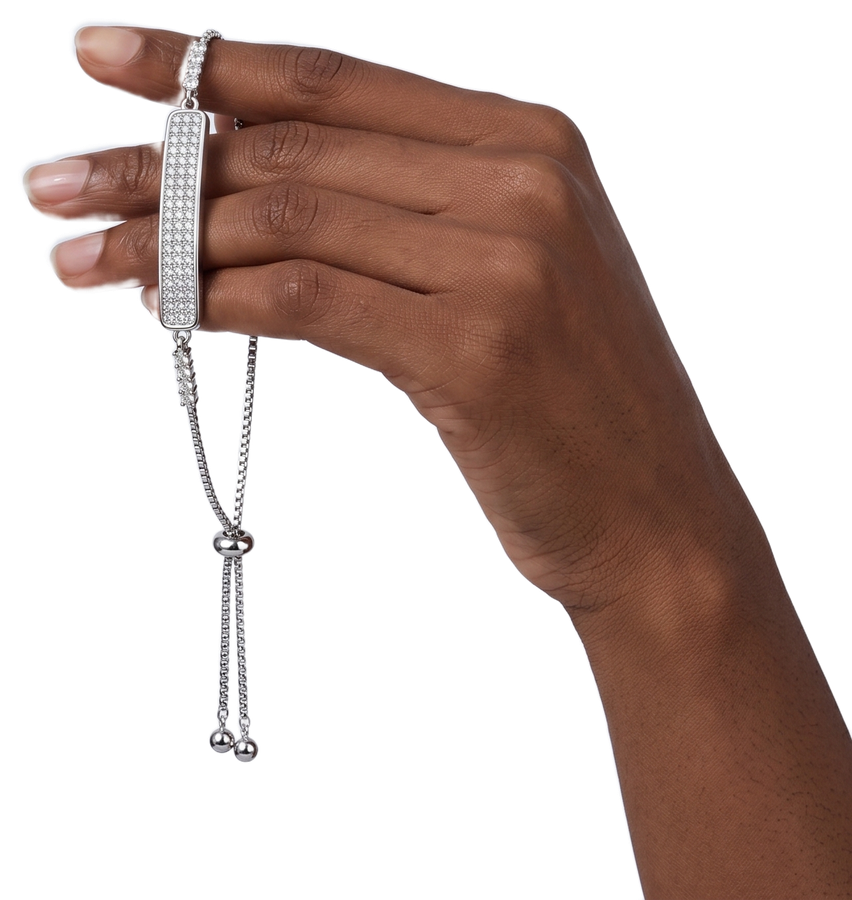
ThumpGem, the jewelry band: heart rate and its variability, blood oxygen, skin temperature, sleep, stress, activity, cycle tracking and blood pressure trend estimates.
ThumpTrack, the scale: body fat, lean mass, muscle mass, body water, bone mass and more.
All three feed one app, so you read one record, not three.
The band reads how your pulse wave is shaped and timed, and that shifts a little from one day to the next. That is exactly why a single reading is not the point.
What the app gives you is a direction, built up one day at a time. A single reading is a snapshot; a month of readings is a direction. Blood pressure, for example, is shown as a trend estimate, not as a cuff reading. It is observation over time, meant to help you ask better questions, not to replace a professional.
Not a promise about how long you will live. For us it means knowing your own body well enough to notice when something shifts, early and calmly. THUMPCARE helps you:
Keep a continuous record instead of a yearly snapshot
See how your sleep, stress and activity move together over weeks
Make changes based on your own curves rather than on a guess
Yes, and that is one of the main reasons we built it. A few months of readings say more than one measurement taken on one morning.
Export your curves from the app and bring them to your appointment
Choose a heart rate threshold you want to be told about, and the band lets you know when you cross it
Ask for a plain-English summary of any metric inside the app, whenever you want one
Keep the long view. Your curves show the direction; your doctor does the interpreting
You walk in with a record instead of a hunch, and the conversation begins somewhere useful.
No, on any of the three products. You buy the device once and every metric and feature in the app is included, for as long as you use it.
No monthly charge, no premium tier, nothing locked behind a second payment.
ThumpFit 2.0. About 10 to 15 days per charge. Fine with sweat, rain and washing your hands; take it off before the shower, the bath and the pool
ThumpGem. About 5 days per charge. Water-resistant to 10 ATM, so it stays on in the shower and in the pool
Both charge in about an hour on the magnetic cable in the box. In practice you plug ThumpFit 2.0 in a couple of times a month and forget about it in between.
The free app runs on iPhone 8 and newer with iOS 14 or later, and on Android 8.0 and newer. The band syncs over Bluetooth.
It arrives charged. Download the app, switch the device on and follow the guided steps; most people are done in a few minutes. No technical setup.
You then have 45 days to decide. If it is not the right fit, return it in like-new condition for a full refund.
You, and nobody else unless you choose to share it. Your data is:
Encrypted in transit and at rest
Stored on secured servers
Never sold, and never handed to advertisers
Everything can be wiped for good from inside the app, whenever you choose.